2500+ Projects Completed Nationwide

Siding Repair in Salt Lake City: Cost, Estimates & What to Expect

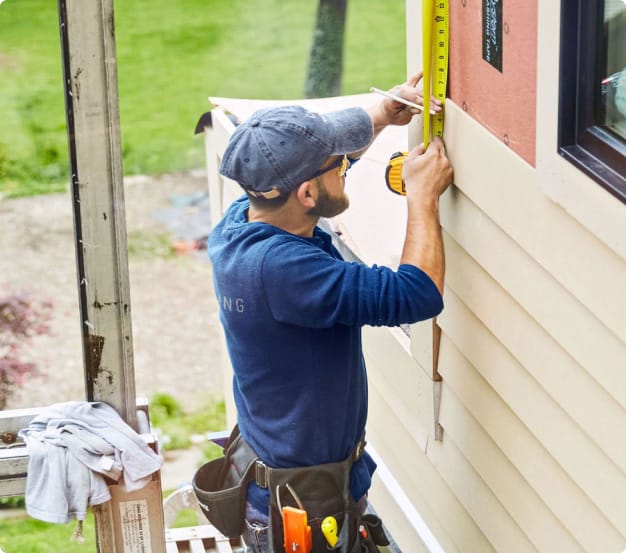
Ideal Siding restores siding worn down by Salt Lake City’s demanding climate, from hail-dented panels in Sugar House to sun-faded, cracked boards on historic homes in The Avenues and Holladay. Whether it’s one loose piece or a whole wall hit by a winter storm, our crew pinpoints the cause, gives you a clear price before any work begins, and makes a lasting repair you won’t have to revisit.

Book a Free Expert Assessment Today

Warning Signs Your Salt Lake City Siding Needs Repair

A damaged section doesn’t automatically mean your whole exterior needs replacing. These are the problems we’re called out for most often in homes across the Salt Lake Valley:

Many siding issues can be fixed without replacing the entire house. Below are the most common reasons Salt Lake City homeowners contact Ideal Siding for repairs:

Cracks and splits

Typically the result of hailstorms, sun-weakened material, or freezing temperatures

Bowed or buckled siding

Commonly caused by summer heat, snowmelt seeping behind the wall, or improper nailing

Separated seams or corner gaps

Allows moisture to slip behind the siding and quietly damage sheathing and framing

Patchy or mismatched color

Usually a sign that a past repair used siding from a different batch or brand

Musty smells or mildew along exterior walls

Usually means water has worked its way in and isn’t drying out

Spongy or soft-to-the-touch boards

Often signals decay underneath, a frequent issue on older homes with wood siding

Can Damaged Siding Be Repaired?

Yes — in most cases, damaged siding can be repaired without replacing the whole wall. Isolated problems like a cracked panel, a small hole, a warped board, or a gap at a seam are typically spot-repaired or panel-replaced in a single visit, and a good contractor can color-match new material closely enough that the repair isn’t noticeable from the street.

Repair is usually the right call when:

  • The damage is limited to one or two panels or a small section
  • The underlying wall sheathing is dry and solid
  • The siding material is still manufactured (or a close match is available)
  • The rest of the siding is in reasonably good condition


Full replacement becomes the smarter option when damage is widespread, the siding is original to a much older home and brittle throughout, or there’s rot in the sheathing behind the siding — patching over a structural problem just delays a bigger repair. During your free inspection, we’ll tell you plainly which category your home falls into and price both options so you can decide.

Siding Repair Cost in Salt Lake City

Siding repairs for Salt Lake City homes start at $1,000, while larger projects involving rot, moisture damage, or multiple walls can run $2,000 to $5,000 or more. Your final price comes down to three things:

Type of siding: Vinyl is usually the most affordable to fix. Wood, fiber cement, stucco, brick, and stone repairs cost more because the materials are pricier and the work is more labor-intensive.

How much damage there is: Swapping out one hail-cracked panel is a fast job. When moisture, mold, or rot has spread behind the siding, the repair takes more time and budget because we have to correct the underlying problem, not just cover up the surface.

Height and accessibility: Upper stories, steep hillside lots along the East Bench, and narrow side yards on older homes can require extra equipment and labor.

Because every home and every material is different, we don’t give ballpark guesses over the phone. We inspect your siding in person and provide a written quote before any work begins, so the price you approve is the price you pay.

Do You Need a Permit to Replace Siding in Salt Lake City?

In most cases, yes. Salt Lake City’s building code makes it unlawful to alter, repair, or improve a building or structure without first obtaining the required permits from the building official, and siding work generally falls under that rule. The city does offer a faster path for siding projects: its Permit by Inspector program, which issues permits before construction plans are approved, lists siding and stucco among the eligible residential project types.

Here’s how that plays out for homeowners:

  • Full re-siding or large replacements will almost always need a permit before work begins.
  • Small spot repairs, like swapping a single cracked panel, may be treated as minor maintenance, but that call belongs to the city’s building officials, not the homeowner or the contractor.
  • Homes in local historic districts, including many in The Avenues and other older neighborhoods, face an extra step. For exterior work in a historic district, Salt Lake City directs applicants to the Planning Counter as their first point of contact, so siding changes there may need design review in addition to a building permit.
  • Electrical work connected to the project, such as relocating exterior lights or outlets, also requires its own permit, since the code covers any installation or alteration to a building’s electrical system.
  • Neighboring communities set their own rules. For example, the Greater Salt Lake Municipal Services District, which serves several unincorporated areas, requires a building permit for replacing siding or stucco.

Skipping a required permit can get expensive. The city can issue a stop work order and charge double the normal permit fee, and it may also record a Certificate of Non-Compliance on the property, alerting interested parties that unpermitted work was done.

Since the line between a minor repair and permitted work isn’t always clear, we confirm requirements with the appropriate building department before any project that might need a permit, so you’re never stuck with unpermitted work on your home. Just ask during your estimate and we’ll explain exactly what your project requires.

What Salt Lake City Homeowners Say About Ideal Siding

Salt Lake City Neighborhoods We Serve

  • Bountiful
  • Box Elder County
  • Cache Valley
  • Centerville
  • Cottonwood Heights
  • Davis County
  • Farmington
  • Holladay
  • Lehi
  • Midvale
  • Murray
  • Riverton
  • Salt Lake City
  • Sandy
  • South Jordan
  • Summit County
  • Taylorsville
  • Utah County
  • Wasatch County
  • Weber County
  • West Jordan
  • West Valley City

FAQ

Our team is always available to assist and provide further details tailored to your specific needs.

What does siding repair cost in Salt Lake City?

Siding repairs for Salt Lake City homes start at $1,000, with the final price depending on your siding material and the extent of the damage. Projects involving rot, moisture intrusion, or multiple walls can reach $2,000 to $5,000 or more. The most accurate way to know your cost is a free on-site inspection.

Can my siding be repaired, or does the whole wall need replacing?

Most of the time, a repair is all you need. Hail cracks, holes, and warped or loose panels can usually be fixed by replacing only the affected pieces. A full wall replacement typically only makes sense when the damage is extensive or the sheathing and framing behind the siding have started to rot.

Is a permit required for siding work in Salt Lake City?

In most cases, yes. Salt Lake City requires permits before a building or structure is altered, repaired, or improved, and siding is among the residential project types eligible for the city’s faster Permit by Inspector program. Homes in local historic districts should start with the city’s Planning Counter for any exterior work, and any related electrical changes need their own permit. We confirm requirements with the building department before starting any job that may need one.

How long will my siding repair take?

Small repairs, like replacing a single panel or a short section, are usually finished in one day. More involved jobs, especially those where we find moisture damage or rot behind the siding, generally take two to three days depending on what we uncover.

Will the new siding blend in with my existing siding?

We source the closest available match in material, profile, and color. Salt Lake City’s strong high-altitude sun fades siding faster than in many places, so on older homes a slight color difference may be unavoidable. If that’s likely on your home, we’ll let you know before any work begins.

Will my homeowners insurance pay for siding repair?

Coverage usually depends on what caused the damage. Sudden events like hailstorms, windstorms, or falling branches are often covered, while wear from age, sun exposure, or lack of maintenance generally isn’t. If your siding was damaged by hail or another storm, we can provide photos and documentation to help support your claim.

How is siding repair different from siding replacement?

A repair targets only the damaged areas and leaves the rest of your siding intact, making it quicker and more affordable. Replacement removes all existing siding and installs new material across the entire home. Replacement is usually the better option when damage covers large areas, your siding is no longer manufactured, or it has reached the end of its typical 20- to 40-year lifespan.

Should I repair or replace my siding?

A good general guideline: if roughly 20 to 25% or less of your siding is damaged and the wall behind it is dry and structurally sound, repair is usually the smarter choice. If you’re seeing damage on several sides of the house or finding rot in more than one spot, replacement often delivers better long-term value. Our free inspection will give you an honest recommendation either way.

Book a Free Consultation
and Estimate

After completing over 1000 projects, we’ve seen it all when it comes to siding.

Please get in touch to get your complimentary quote on a siding job today!

Or call now

(604) 239-2898

The information you provide will only be used by our team and will not be sold to another party.