
Chicago siding on your mind? Let me save you the three-month headache of choosing siding for home — here’s the real story. This isn’t a quick «buy this siding» recommendation. This is the story of how I lost sleep, annoyed my contractor buddy, argued with my wife over color swatches at midnight, and ultimately wrapped my 150-square-meter, two-story Chicago home in something I’ll never have to worry about again.
I’m writing this from Chicago home’s my living room, looking out at a brutal April sleet storm. A year ago, weather like this would’ve sent me into a panic. Now? I’m just watching it slide right off.
The Chicago Weather Reality Check»
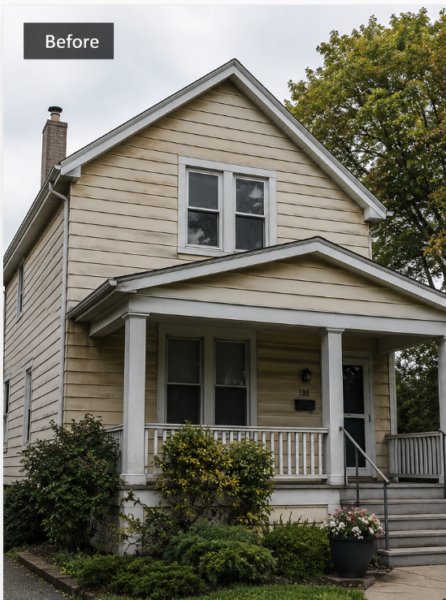
When we bought this place, it was a classic «good bones, ugly face» situation. The old exterior siding was a tired mix of aluminum siding on the upper floor and some weird, painted-over wood paneling on the lower half that had seen better days. My wife, Sarah, loved the neighborhood and the layout. I loved the potential. But the exterior? We both knew it was a ticking time bomb.
The first winter in the house, our heating bill was a gut punch. I’m talking «cancel your streaming services» level of pain. I went into the attic and realized the insulation was fine. The problem was the walls. The old siding wasn’t just ugly; it was acting like a sieve, and I needed the best siding for Chicago to fix it. Chicago winters don’t mess around. I’m talking about week-long stretches below zero, wind screaming off Lake Michigan so hard it stings your face, freeze-thaw cycles that can shatter concrete like a hammer, and then — just for balance — a 90-degree, air-you-can-wear kind of summer. Any siding I chose had to be a warrior.
I gave Mike a call — he’s my oldest friend and a contractor Chicago locals rely on, who’s seen 20 winters worth of home disasters. He came over that afternoon, gave the house a good hard look, and when he got to the back door he pulled out his screwdriver and probed a suspicious spot. The metal slid in way too easily. He pulled it out, wiped it on his jeans, and just shook his head in that tired, «I told you so» kind of way. «Look, he said, you’re not buying a pretty exterior. You’re buying a protective system. Start thinking in layers, not just curb appeal». He knows everything about siding Chicago properties. «And you need something Engineered for Climate®. Not just any siding, but something that won’t warp when it’s -10°F and then peel when it’s 95°F.» He and I discussed how fiber cement — specifically James Hardie — is formulated for our specific weather zone with their HZ5® product. But he told me not to take his word for it and to go do my research. So I did. For three months, I became an obsessive expert on every square foot of my exterior walls.
The Siding Contenders: A Deep Dive
I had five main options for siding for my home representing types of exterior siding staring me down: vinyl, steel, engineered wood, fiber cement, and cedar. Let me walk you through the emotional and practical rollercoaster of each.
Vinyl Siding: The Budget Temptation
Vinyl siding was the first one I looked at because, honestly, the price tag made my wallet sigh with relief. I saw numbers like $8.50 per square foot installed and up. For my whole house, that could’ve been around $18,000–$22,000 easily. I almost pulled the trigger. But then I started talking to people. My neighbor two doors down, a sweet guy named Terry, has vinyl. He told me a story that chilled me more than any polar vortex. A few years back, a chunk of ice slid off his roof and hit the side of the house. It didn’t just scuff it; it shattered a whole section like a car windshield. In extreme cold, vinyl becomes brittle, almost glass-like. The idea of snowblower debris or a kid’s errant hockey puck turning my house into a cracked mess wasn’t just a possibility — it was a statistical probability. I also noticed on Terry’s house, the side that gets full summer sun had started to slightly warp and the color had faded significantly. It just didn’t have the longevity I needed.
Steel Siding: The Industrial Armor
Next, I went down the rabbit hole of steel siding. This stuff seemed bulletproof, literally. It’s classy-looking too, with those clean, modern lines. I found a supplier who showed me incredible finishes that mimicked wood grain. The stats are wild: it can last 50+ years, it’s fireproof, and bugs won’t even think about it. The cost for a project like mine could range from $45,000–$60,000 for premium siding. However, I spotted a problem during a hailstorm research spiral. Steel can dent. A flying branch in one of our legendary windstorms? A big hailstone? You end up with a noticeable pockmark. And if the coating gets scratched down to the metal, you’ve introduced a point where rust can start to creep, especially with all the moisture we get. Trying to match a panel five years later would be a nightmare. It felt like armor that could get a scar you couldn’t heal.
Engineered Wood (LP SmartSide): The Good-Looking Compromise
LP SmartSide was a serious contender for about two weeks. It’s wood strands coated in resin and compressed, and it has this warm, authentic wood look that vinyl just can’t fake. It’s wood strands in resin, pressed into boards with real warmth vinyl can’t match. Zinc borate baked in for rot and termite resistance. Solid warranty. But here’s the Chicago problem: edges. Every cut must be painted perfectly. Every joint must be sealed perfectly. One tiny gap + our humid summer or a sideways rain = moisture in the core, swelling, and delamination down the road. I’m handy, but the crew will be moving fast. One missed seal on a long wall, and game over. It required a level of maintenance and faith in the installation process that I wasn’t comfortable with for what I wanted to be a «forever» solution.
Cedar Siding: The Natural Beauty That Broke My Heart
Okay, this one was personal. My grandparents had a cedar shake cottage in Michigan, and the smell and the look are just pure nostalgia. Cedar siding, whether clear vertical grain or tight-knot, is drop-dead gorgeous. It’s natural, it’s an insulator, and it gives your house a soul that no manufactured product can replicate. I spent hours on Pinterest late at night, picturing the silver-gray patina it would develop. Then reality hit me like a bucket of cold water. Mike came over for a beer and literally laughed when I told him I was considering cedar. «Do you want to spend every other summer of your life on a ladder?» he asked. In our Chicago climate — wet springs, humid summers, freezing winters — cedar is a full-time job. It needs to breathe, which means you can’t just paint it with a thick sealer. You have to stain it, and re-stain it, and power-wash it gently, and watch for rot at the bottom edges, and deal with woodpeckers drilling holes looking for insects. The expansion and contraction alone can pop nails and split boards. It was beautiful, but I wanted to be a homeowner, not a full-time maintenance caretaker. I had to let the dream go.
Fiber Cement (James Hardie): The Heavyweight Champ
This is the one Mike kept coming back to. After all my research, I concluded that best siding for Chicago has to handle freeze-thaw cycles without cracking. James Hardie siding. It’s a composite of cement, sand, and cellulose fibers. It’s heavy, it’s dense, and it’s specifically engineered for regional climates. Their HZ5® line is literally designed for places like Chicago that endure deep freezes, snow, and ice. This fact hit me hard: standard fiber cement can absorb water, but Hardie’s formulation resists it, meaning no freeze-thaw cracking. It’s fire-resistant (non-combustible), pests hate it, and it won’t rot. The installed cost, from the quotes I got, ranged from around $11–$15 per square foot and up. For my 150-square-meter house, that put the project in the $24,000–$33,000 ballpark, all-in. The upfront cost made me swallow hard. But the product is pre-finished with their baked-on ColorPlus® Technology, which means the color isn’t just painted on; it’s cured onto the board, resistant to Chicago’s UV rays and fading. The warranties ranged from 30 years on the finish to a lifetime on the product. The only con? It’s heavy and requires specialized installation. You can’t DIY this. The dust from cutting is silica-heavy, requiring special saws and respirators. It demands a pro crew who know exactly what they’re doing with the clearance gaps and flashing.
| Siding Material | Typical Installed Cost per sq ft | Durability (in Chicago Climate) | Key Consideration for Me |
|---|---|---|---|
| Standard Vinyl | $8.50 – $11.00 | Medium (Brittle in extreme cold, can crack on impact) | Price was tempting but the cold-weather horror stories scared me away. |
| Engineered Wood (LP SmartSide) | $10.00 – $14.00 | Medium-High (Durable, but critical edge-sealing required; moisture risk) | Looked great and felt like real wood, but I worried about moisture damage at cut edges over time. |
| Steel | $18.00 – $25.00 | High (Can dent from hail or debris; potential for rust if scratched) | Insanely strong, but the idea of a permanent dent or rust spot on my new house was a turn-off. |
| Fiber Cement (James Hardie) | $11.00 – $15.00 | Very High (Engineered for freeze-thaw, 30–50 year lifespan) | Expensive upfront, but my contractor and warranty convinced me it’s the true “forever home” solution. |
| Cedar | $16.00 – $22.00 | Medium (Natural beauty, but high maintenance; rot/insect risk without upkeep) | Gorgeous and full of charm, but I didn’t want a lifetime of staining, sealing, and ladder work. |
The Family Council and The Final Decision
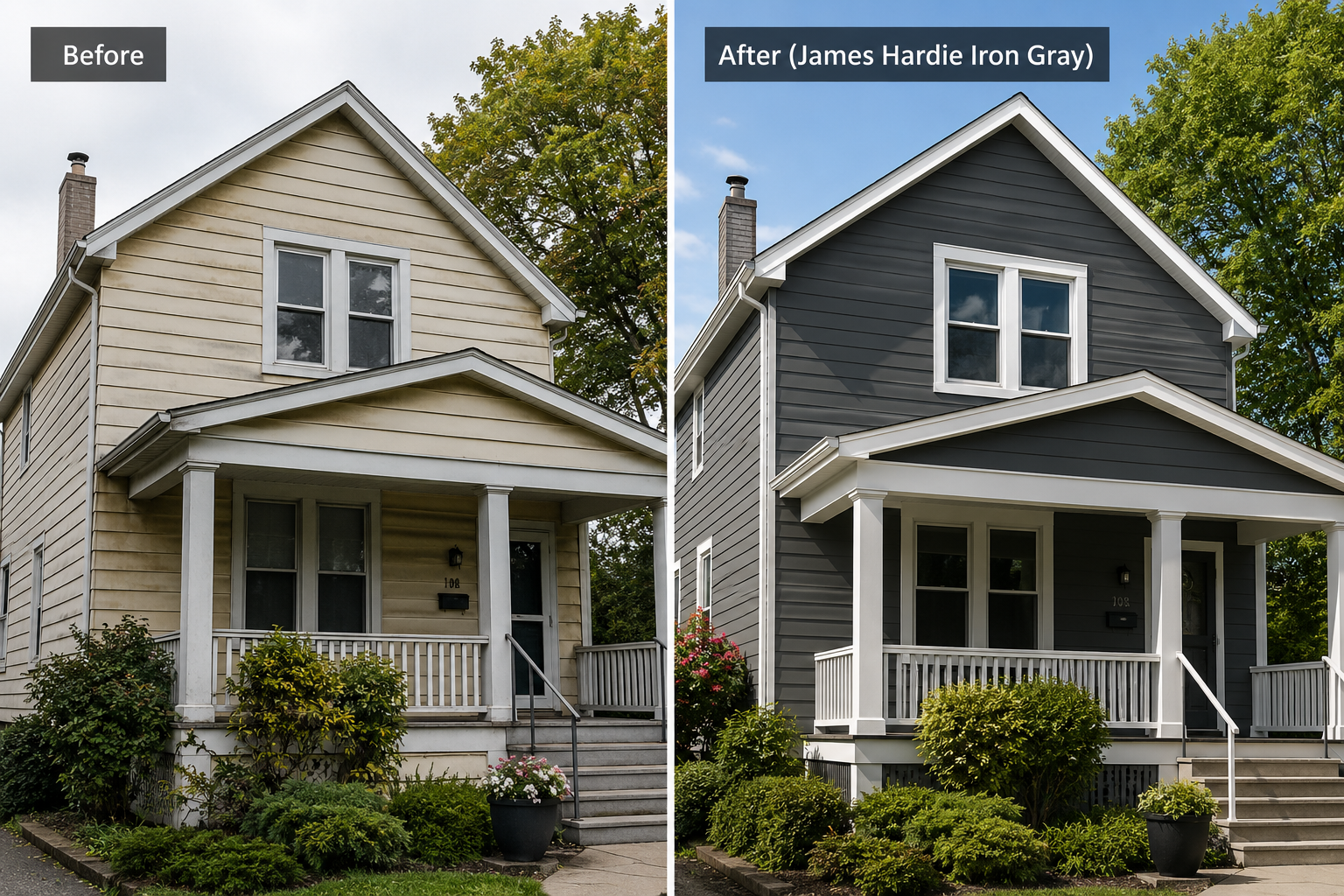
In the end, it took one family meeting. Pro-con list. Quotes. Samples. Two color swatches — «Cobble Stone» and «Iron Gray» — leaning against the brick. Sarah looked at the numbers and asked, «Are we doing this again in 15 years, or once and forever? Because I’m not doing this twice». That was all she wrote. We picked James Hardie siding fiber cement in «Iron Gray» with bright white trim. It handles -20°F to 40°F swings without flinching, it’s fire-resistant, and it nailed the modern look Sarah wanted. The only siding that truly settled our Chicago weather anxiety for good.
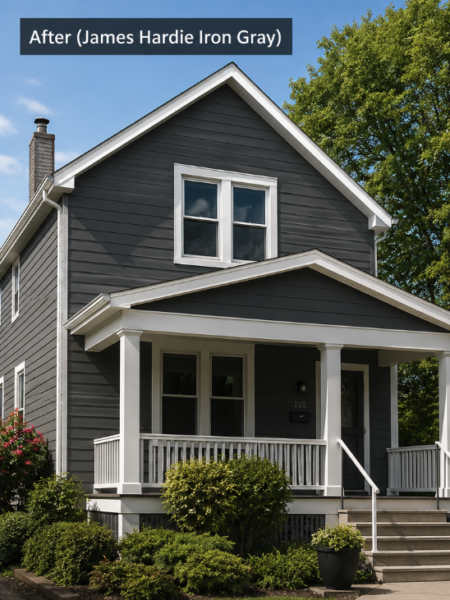
Installation: The Two-Week Transformation on My Two-Story Home
So, you have a 150-square-meter, two-story house. For Americans, that’s roughly 1,615 square feet of living space, but the exterior surface area of a two-story home also includes the gables, soffits, and windows, so the actual siding square footage is larger. Here’s exactly how the siding went down.
First, I vetted contractors in Chicago like I was hiring a Secret Service agent. I checked their James Hardie certification, because if it’s not installed to their spec, the warranty is void. I read reviews until my eyes bled. I went to see a house they’d done five years ago in Oak Park. The finalist crew had done hundreds of Hardie jobs. They arrived on a Monday.
Day 1-3: Phase one was pure destruction. A massive dumpster took up permanent residence in my driveway, and the four-person crew went to work stripping the house bare of its old exterior siding. The noise alone was an experience — boards cracking, old nails screaming as they were yanked out, and every so often a worker muttering, “Well, there’s another one,” when they found something ugly. The ugliest find? Rotted OSB sheathing lurking around two windows where the previous siding had been quietly funneling moisture for years. That little surprise turned into a change order: an unplanned $2,500 to replace those sections and get the house wrapped in a properly sealed weather-resistant barrier before the new siding even touched the walls. Annoying, but also a massive relief. I was finally fixing the house’s skeleton, not just putting makeup on it.
Day 4-7: The Wrapping and Flashing. This step is invisible to the untrained eye but is the most critical. They installed a high-performance house wrap, sealing every seam with tape. Then came the meticulous flashing around every window, door, and corner. In a Chicago winter, water can sneak into a hairline gap and destroy your house from the inside out. The crew chief, a guy in his fifties named Carlos, showed me how they were creating a complete drainage plane so any moisture that got behind the siding would hit the wrap and slide down and out the bottom. I learned more about building science in those four days than in my entire life.
Day 8-13: The Armor Goes Up. With the Hardie planks on site, the crew went vertical — scaffolding encased our two-story house from ground to roofline, turning it into a miniature construction project. They made those planks fit with a specialized shear that snips without the silica dust a saw would have thrown. It was a small detail, but knowing the air wasn’t filled with that stuff made the whole process feel safer and smarter. The first lap of siding is the most important; they use a special starter strip, and every subsequent plank overlaps the last. They used hidden nailing, and the lines were so perfectly level it was like watching an artist. They also replaced all the soffits and fascia with Hardie trim, capping the entire system. The deep shadow lines of the lap siding started to give the house a dimension it had never had before.
The Budget Breakdown: What It All Cost
I’ve talked a lot about numbers, but here’s the sobering reality of siding a two-story house in Chicago with a premium product in 2026:
Tear-off and disposal of old siding: $3,500
Sheathing repair and house wrap replacement: $2,500 (unexpected, but essential)
James Hardie lap siding, trim, soffit, and fascia material (pre-finished ColorPlus): $18,000
Labor for installation (certified crew): $12,000
Permits and final inspection: $1,000
Total project cost: Just over $37,000.
Yes, you can get vinyl installed on a house this size for $15,000. But framing the cost in terms of decades, not years, completely changed my perspective. I’m paying for a 50-year shield that won’t crack in my third polar vortex.
Living With It: One Year Later
Last January, we hit a stretch of -15°F. I walked around the house in the dead of night (my wife thinks I’m insane) and put my hand on the siding. It was solid. Not a single hairline crack. This spring, we had gusts over 50 mph that sent patio furniture flying. No pulled nails, no rattling boards. The house is silent against the wind now, thanks to the new exterior siding. Our heating bill dropped by 19% over the previous winter because of the new exterior shell and the insulated wrap beneath it.
The color, baked on in that factory, still looks as rich as the day the crew packed up. I just hose it down once a year, and the home exterior siding still looks new.
Looking back, the emotional journey of choosing siding was a battle between short-term savings and long-term sanity. My advice to you, standing in my shoes now: when picking siding for home, don’t just pick a material. Pick a shield for the life you want to live inside your house. For a two-story home in the heart of Chicago’s wild weather, fiber cement was that shield. It’s the one home improvement argument I’m glad my wife won. If you’re pulling the trigger, do the deep research, hold the samples in your hands, and then pay for the best siding installation crew you can find.